Dr. Eleven
Station ElevenDr. Eleven is the physicist and central figure of Miranda Carroll’s comic-book series, a future-dwelling hero whose damaged home and divided community give imaginative form to questions of exile, memory, and return. The two issues Arthur Leander gives Kirsten Raymonde survive the collapse as rare, worn objects; by Year Twenty, Kirsten knows them by heart. Dr. Eleven’s story thus outlasts its fictional world and becomes one of the means by which the novel connects lives separated by catastrophe.
Identity and Creation
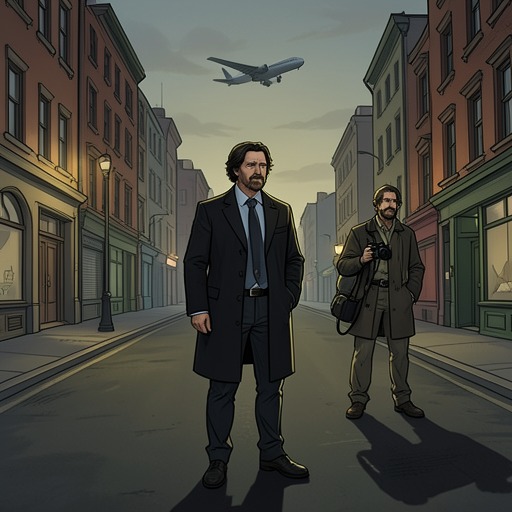
Dr. Eleven is a brilliant physicist living a thousand years in the future. He takes his name from Station Eleven, the vast space station that is also his home. Miranda Carroll describes him as dashing, occasionally sarcastic, and afraid of nothing, with poor luck in love. His temperament is deliberately unlike that of Pablo, despite their striking physical resemblance. The contrast makes Dr. Eleven not a simple portrait of a real person but a remade figure: familiar in outline, yet defined by qualities Miranda imagines differently.
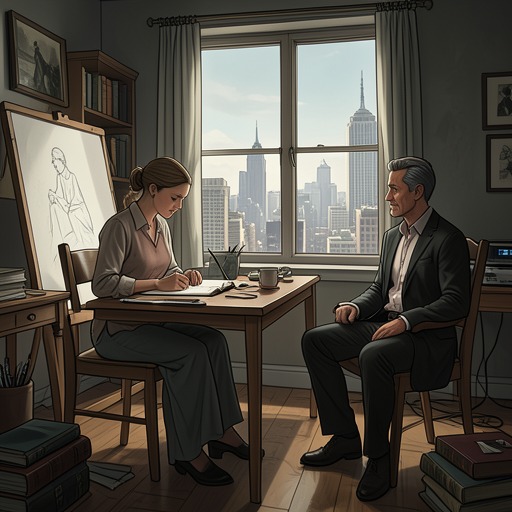
The character appears in two issues, Dr. Eleven, Vol. 1, No. 1: Station Eleven and Dr. Eleven, Vol. 1, No. 2: The Pursuit. Their production is unusually elaborate for comics that have become the sole surviving examples familiar to Kirsten’s companions. A Symphony member who had worked in printing observes that the bright images and archival paper suggest great expense and perhaps a private project rather than ordinary mass production. The issues provide no biographical information about their creator, and the author’s name appears only as M. C. The first is marked “Copy 2 of 10” and the second “Copy 3 of 10,” leaving open the possibility that only ten copies of each were made.
Station Eleven and Its Divided World
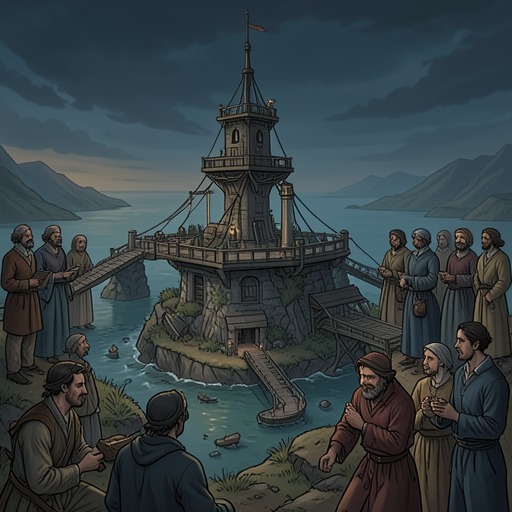
Station Eleven is roughly the size of Earth’s moon, but it was designed to resemble a small planet and can chart a course through galaxies without needing a sun. Its seas, islands, bridges, and artificial sky make it a place that can be pictured as both engineered refuge and landscape. War has damaged the sky systems, leaving the surface in perpetual sunset, twilight, or night. Damage to systems governing ocean levels has also submerged most of its land: the remaining islands were once mountaintops.
The wider history behind Dr. Eleven’s life is one of invasion and escape. A hostile civilization from a nearby galaxy has seized Earth and enslaved its people. A few hundred rebels steal a space station and escape through a wormhole, hiding in the uncharted reaches of deep space. Dr. Eleven and his colleagues belong to this fugitive community. Their refuge is extraordinary, but it is not an uncomplicated sanctuary: its inhabitants have escaped one world only to inherit a damaged, dark one.
That tension becomes a political and emotional schism. After fifteen years of perpetual twilight, some residents want to return to Earth and seek amnesty, even under alien rule. They live in the Undersea, an interconnected network of vast fallout shelters beneath the station’s oceans; their number has reached three hundred. Their longing is not presented merely as a wish to abandon the rebels’ cause. The desire to see sunlight again gives their position an intimate, bodily urgency, while their hope of going home challenges the assumption that survival in exile is enough.
Captain Lonagan and the Undersea
In one scene Miranda is sketching, Dr. Eleven travels by boat with his mentor, Captain Lonagan, through perilous waters above an Undersea gate. The scene brings the abstract division within the station into physical focus: the boat crosses over the entrance to the shelters, while the people below remain out of sight. Captain Lonagan urges Dr. Eleven to try to understand the Undersea residents. Their wish to see sunlight, he suggests, is a claim that deserves sympathy, not a failing to be dismissed.
Captain Lonagan’s death changes the emotional register of the comic. After it, Dr. Eleven thinks of himself as estranged from his own life. Miranda first drafts an interior line describing that feeling, then erases and rewrites it because the sentiment does not fit the image. She adds a close-up of a note left on Captain Lonagan’s body by an Undersea assassin: “We were not meant for this world. Let us go home.” The note makes the schism personal and deadly, but its words also express a grief that Dr. Eleven recognizes. Holding it on a rocky outcropping, with the dog beside him, he returns to his city and its damaged life, loneliness, and remembered Earth. The story’s competing claims—home as a place to return to, and home as a life one must keep inhabiting—remain in tension.
Survival as a Remembered Story
Dr. Eleven’s images recur as a material and imaginative thread through the novel. In a memorable spread, he stands on dark rocks above an indigo sea at twilight; small boats travel between islands, wind turbines turn on the horizon, and a small white dog stands beside him. Kirsten and other Symphony members identify the animal as a dog, though it resembles no dog Kirsten has known; its name is Luli. The line across the image joins the damaged landscape to a memory of Earth and its lost sweetness. In another presentation of the spread, Arthur recognizes the image and recalls seeing its cover on a studio wall in Los Angeles. The comics pass from Miranda’s work to Arthur’s gift to Kirsten, carrying both an invented world and the trace of the relationships through which it traveled.
By Year Twenty, Kirsten has memorized both issues, although the copies are dog-eared and soft at the edges. When she and August search a house for books, she says she would settle for finding Dear V. if Dr. Eleven is unavailable; the preference makes clear how persistently the comic remains present to her. Later, when August asks whether she would choose to live in a parallel universe where the comics were real, Kirsten imagines boarding Station Eleven and escaping before the world ended. August points out that the world did not end; it is still turning. Her answer—that Station Eleven is beautiful, with its islands and bridges—does not erase that correction. Instead, the imagined station offers a way to look at a damaged world without pretending damage has made beauty impossible. Dr. Eleven’s importance lies in that double vision: his home is broken, his community divided, and his story still capable of being carried forward.